
How to Prevent Mould in Jamaica (Clothes & Furniture)
How to Prevent Mould in Jamaica: Stop Mildew on Your Clothes, Furniture and Stored Things
Short answer: Mould needs damp to grow, so control the damp. Keep air moving, keep humidity under 60%, dry anything wet within 24 to 48 hours, and never pack things away while they are still damp.
Why everything goes mouldy in Jamaica
Mould is not a sign of a dirty house. It is a sign of trapped damp.
Our warm air holds a lot of moisture, especially in the rainy months. Concrete walls and floors stay cool and pull that moisture in. Close up a room, push the furniture against the wall, and you have the perfect place for mould.
The US Environmental Protection Agency puts it simply: you cannot remove every mould spore, so the way to control mould is to control moisture (EPA).
The five places mould hides first
Closets built against outside walls.
Behind sofas, beds and cabinets pushed tight against a wall.
Under mattresses sitting on a solid base.
Bathrooms, kitchens and wash areas.
Shoes, handbags and belts, especially leather.

How to stop mould on clothes
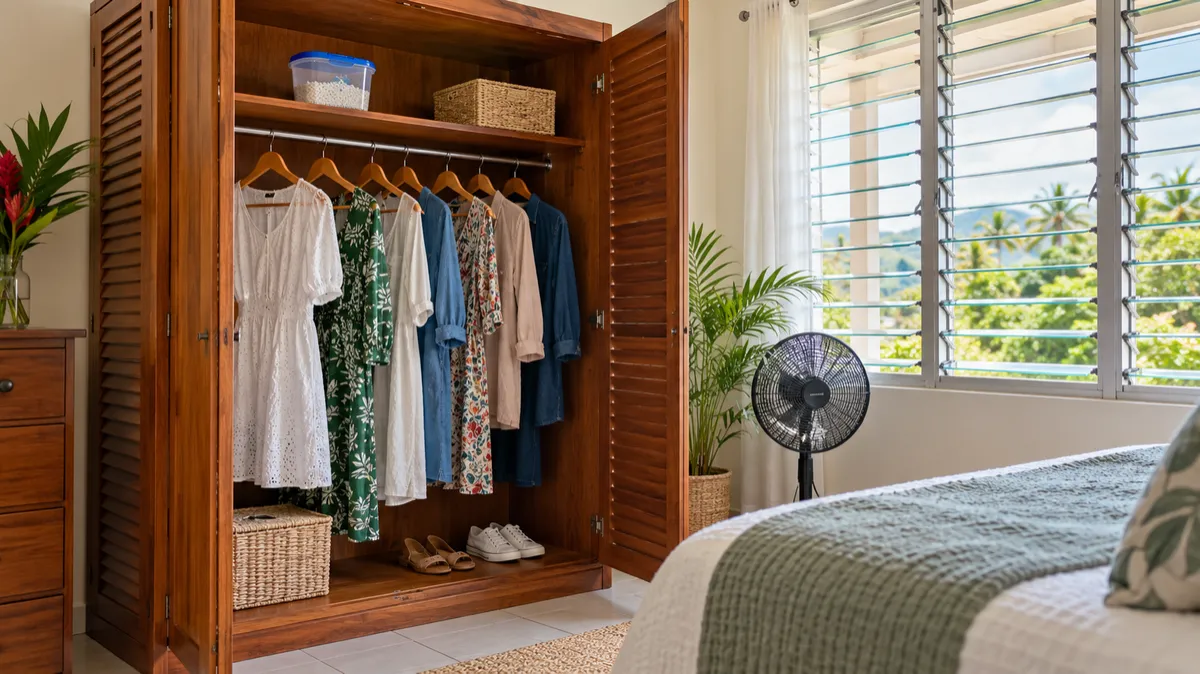
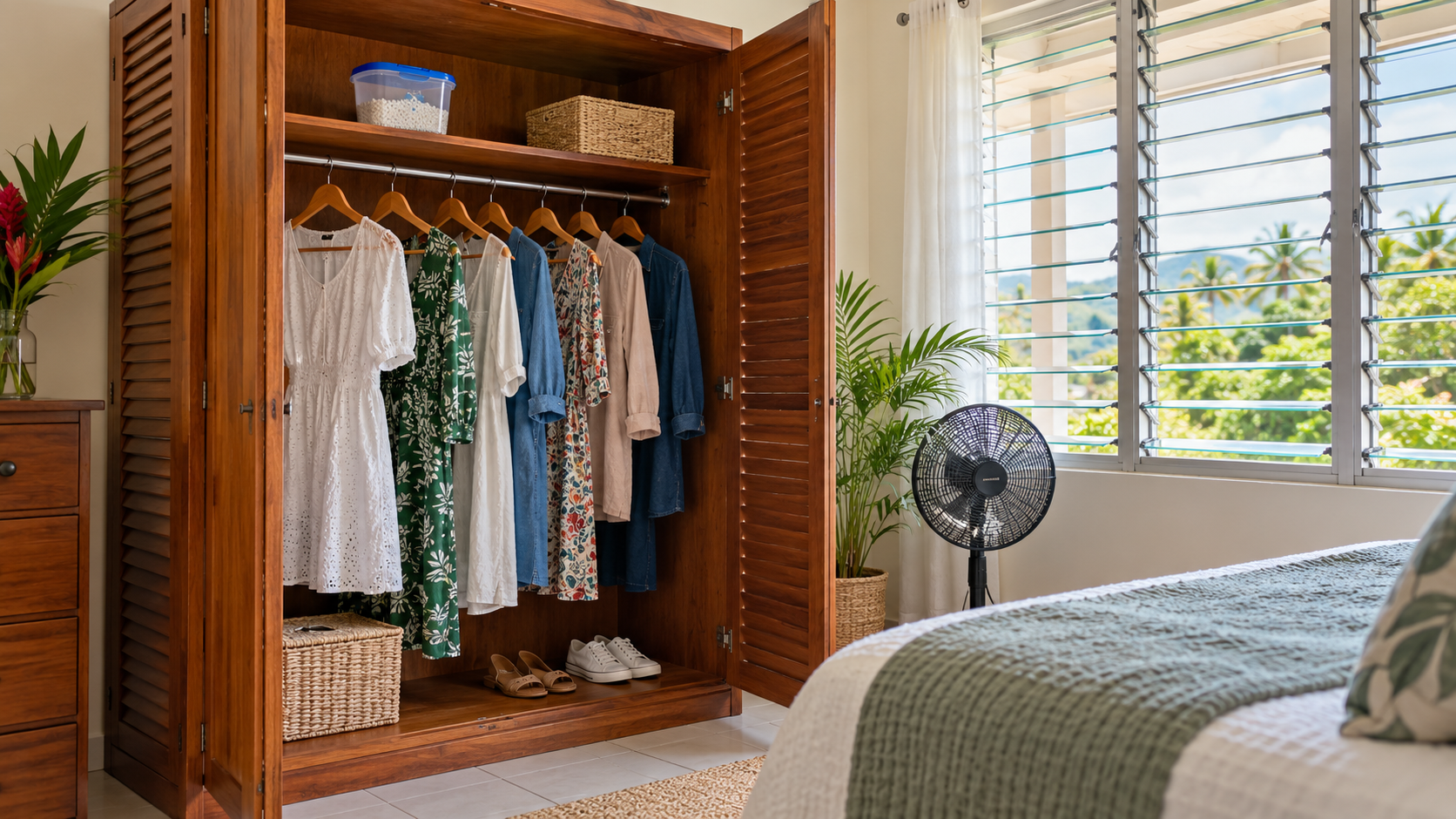
Make sure clothes are fully dry before you put them away. On rainy days, finish them in front of a fan.
Do not pack the wardrobe tight. Air needs to move between hangers.
Open the closet door for an hour a day, or fit a small vent.
Put damp-absorber tubs or silica gel packs on closet shelves. Change them when they fill up.
Keep leather in cotton bags, not plastic.
Wash mildewed clothes, then dry them in full sun until they are completely dry.
How to stop mould on furniture
Pull furniture a few inches away from the wall so air can move behind it.
Put furniture feet on small pads or blocks, not straight on the concrete.
Run a fan in closed rooms. An air conditioner or dehumidifier helps if you have one.
Buy a cheap humidity meter. The EPA says to keep indoor humidity between 30% and 60%, so you only run the dehumidifier when you need to.
Clean mould off hard surfaces with water and detergent, then dry them completely (EPA).
Soft items that are badly mouldy, like cushions or carpet, may have to go.
Mould can trigger allergies and asthma, according to the EPA. If a large area is affected, or someone at home has breathing problems, get professional help.
How to pack things for storage so they come out fresh
Wherever you store your things, the way you pack them decides how they come out. Most "storage mould" was packed in with the item.
Dry everything first. Nothing goes into a box or bin unless it is bone dry.
Clean first. Crumbs, sweat and body oils on fabric feed mould.
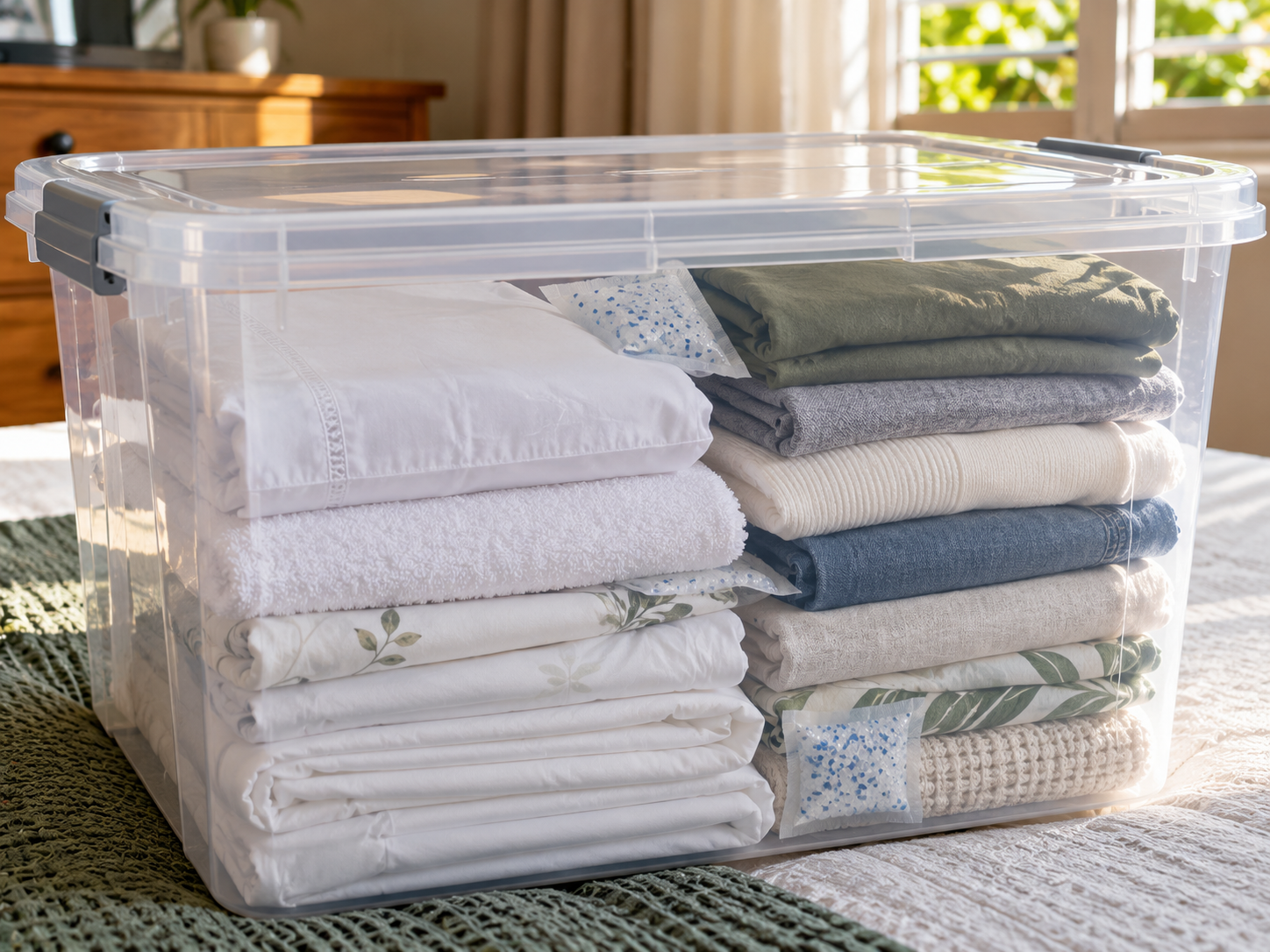
Use plastic bins with lids for clothes and linen. Drop a few silica gel packs inside.
Do not wrap wooden furniture or mattresses airtight. Cover them with old cotton sheets so they can breathe.
Keep a gap between items and the walls. Raise everything off the floor on pallets.
Clean and dry fridges and freezers fully, then prop the door open so they do not grow mildew inside.
Seal papers and photos in zip-lock bags with a silica gel pack.
Visit every month or two. Open a bin, check, and change the absorbers.
Too much stuff in a small house also traps damp, because air cannot move. We wrote about how clutter affects how you feel at home; it affects your furniture too.
Quick fixes for common mould problems
Problem | What to do |
|---|---|
Musty smell in the closet | Remove half the clothes, add a damp absorber, leave the door open daily |
White spots on shoes or bags | Wipe clean, dry in the shade, store in cotton bags with silica gel |
Black spots behind the sofa | Clean with water and detergent, dry fully, move the sofa off the wall |
Stored clothes smell musty | Wash, dry in full sun, repack only when bone dry, add silica gel |
Furniture wet after a storm | Dry within 24 to 48 hours with fans and open windows; remove any plastic wrap |
Frequently asked questions
What humidity stops mould from growing? The EPA recommends keeping indoor humidity between 30% and 60%. A humidity meter from a hardware store tells you where your home is.
How fast does mould grow after water damage? The EPA says to dry wet materials and furniture within 24 to 48 hours to prevent mould. After a storm or a leak, start drying the same day.
Does sunlight get rid of mildew on clothes? Sun helps because it dries clothes completely and fades the smell. Wash the clothes first, then dry them in full sun.
Can I store a mattress without it getting mouldy? Yes, if it is completely dry when it goes in. Use a breathable cotton cover, not airtight plastic, and keep it off the floor.
Is mould dangerous? It can cause allergic reactions, asthma and other breathing problems. Clean small spots yourself; get a professional for large areas.
Need more breathing room at home?
Moving extra furniture out lets air move again. Use our size calculator to see what fits, or book a free site tour.
