
The Returning Resident's Survival Guide: How to Move Back to Jamaica in 2026 Without Losing Your Mind or Your Belongings
The Returning Resident's Survival Guide: How to Move Back to Jamaica in 2026 Without Losing Your Mind or Your Belongings

You have been planning this for years. The move back home, the fresh start, the slower pace you have been craving. But the container is delayed, your cousin's house is smaller than you remembered, and you have no idea what to do with fourteen boxes of belongings you cannot unpack yet. This guide is the one you wish you had six months ago.
Moving back to Jamaica as a returning resident is one of the most emotional, logistically complex, and deeply personal transitions a person can make. There is very little content written specifically for this experience. Most moving guides are written for Americans relocating within the United States. This one is written for you.
Section 1: The Real Timeline of a Return Move
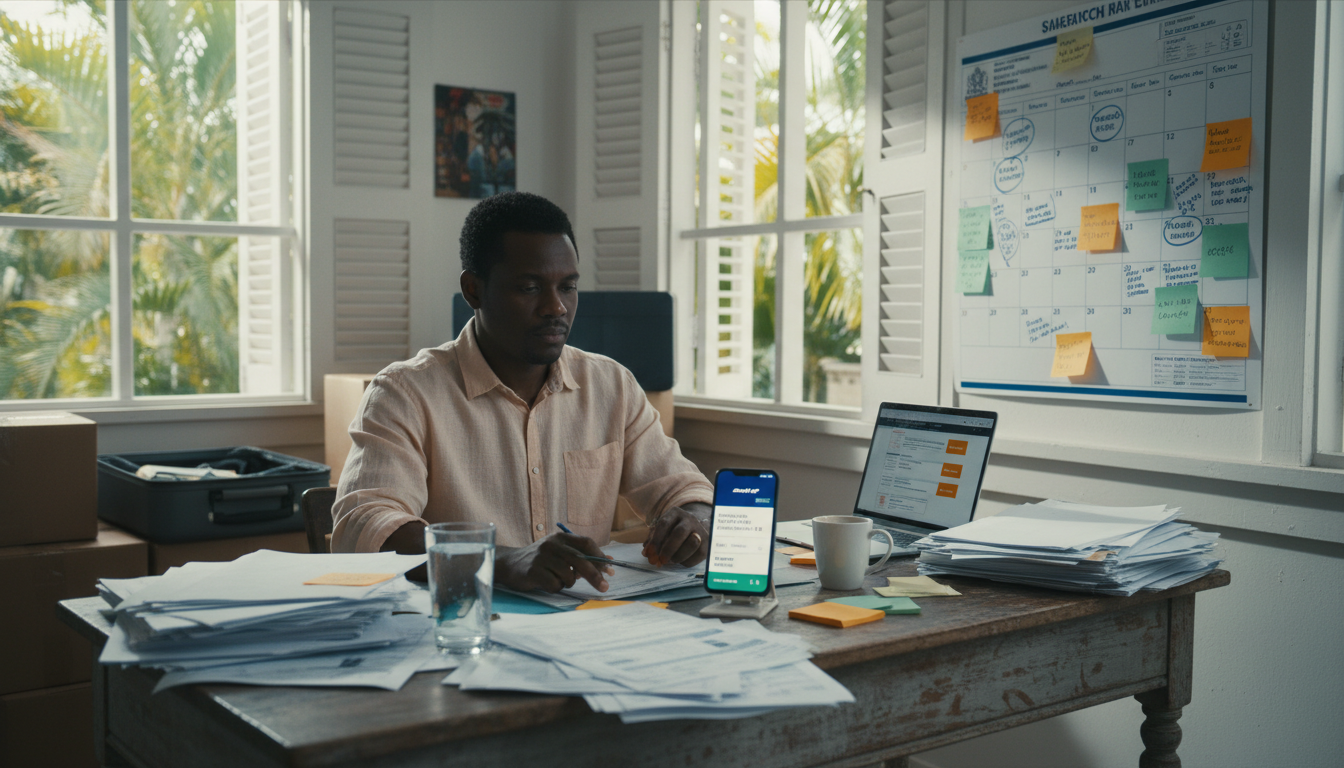
Let us start with the truth that nobody tells you clearly enough: your return to Jamaica will almost certainly take longer than planned. Not because you are doing anything wrong, but because the process itself is layered in ways that cannot always be controlled.
Here is what a realistic timeline often looks like:
6 to 12 months before: Sorting and deciding what to bring, what to sell, and what to leave behind. This phase alone takes longer than most people expect because every item carries a decision and a memory.
3 to 6 months before: Booking shipping containers, arranging freight, notifying your current landlord or estate agent, and beginning customs preparation paperwork.
At departure: Shipping your container, flying home, and beginning temporary or transitional housing while you wait for your container and find your permanent home.
Weeks to months after arrival: Waiting for your container at port, navigating Jamaican customs, waiting for clearance, arranging delivery, and unpacking.
Reality check: Between port arrival and clearance, delays of several weeks or even months can occur depending on documentation, demand at port, and seasonal factors. Anyone who tells you "it will be quick" is being optimistic. Plan for the best but prepare for the realistic.
What to Ship, What to Sell, and What to Store
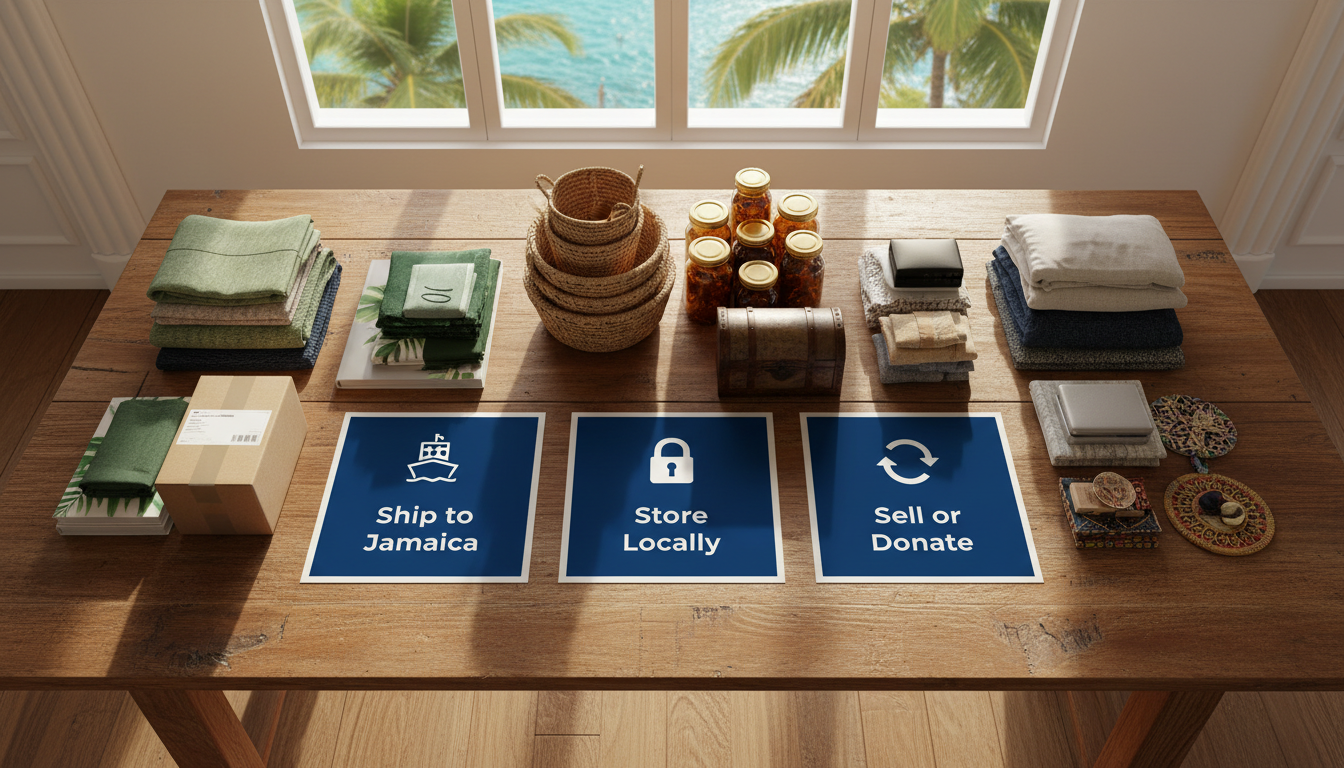
This is the single most important decision you will make in your entire move process, and most people make it under pressure without a framework. Here is one that works:
SHIP TO JAMAICA:
Items that are difficult or expensive to buy on the island, irreplaceable heirlooms or sentimental items, professional equipment, quality furniture you have already paid for and that will serve you for decades.
SELL OR DONATE BEFORE YOU LEAVE:
Electronics that are region-specific or will not work on Jamaica's electrical system without heavy adaptation. Bulky furniture that is not worth the freight cost. Anything you are holding onto "just in case" but have not used in two years.
STORE LOCALLY IN JAMAICA:
Items from your shipping container that cannot fit in your temporary housing. Furniture waiting for your permanent home. Seasonal items. Business equipment for a venture you are launching. Family heirlooms you want protected while you settle in.
This third category, local storage, is the one that most returning residents do not plan for and then scramble to solve on arrival.
Navigating Jamaican Customs: What Every Returning Resident Needs to Know
Customs is where many returning residents experience the most frustration. The important thing to know is that Jamaica does have provisions for returning residents regarding duties on household goods and personal effects, but these provisions come with specific requirements that must be met.
Please verify all of the following with Jamaica Customs Agency (JCA) directly before your move, as regulations change and specific eligibility criteria apply:
Items classified as "household goods" brought in by returning residents may qualify for duty relief, but documentation is essential. You will typically need proof of your period of residence abroad, an itemized inventory of everything in your container, and proof of ownership for major items.
Starting this paperwork early, working with a licensed customs broker in Jamaica, and keeping organized records of everything you own and when you bought it will make an enormous difference to your experience at port.
A reliable customs broker is not an optional luxury for this process. It is one of the best investments you can make.

The Temporary Housing Problem Nobody Talks About
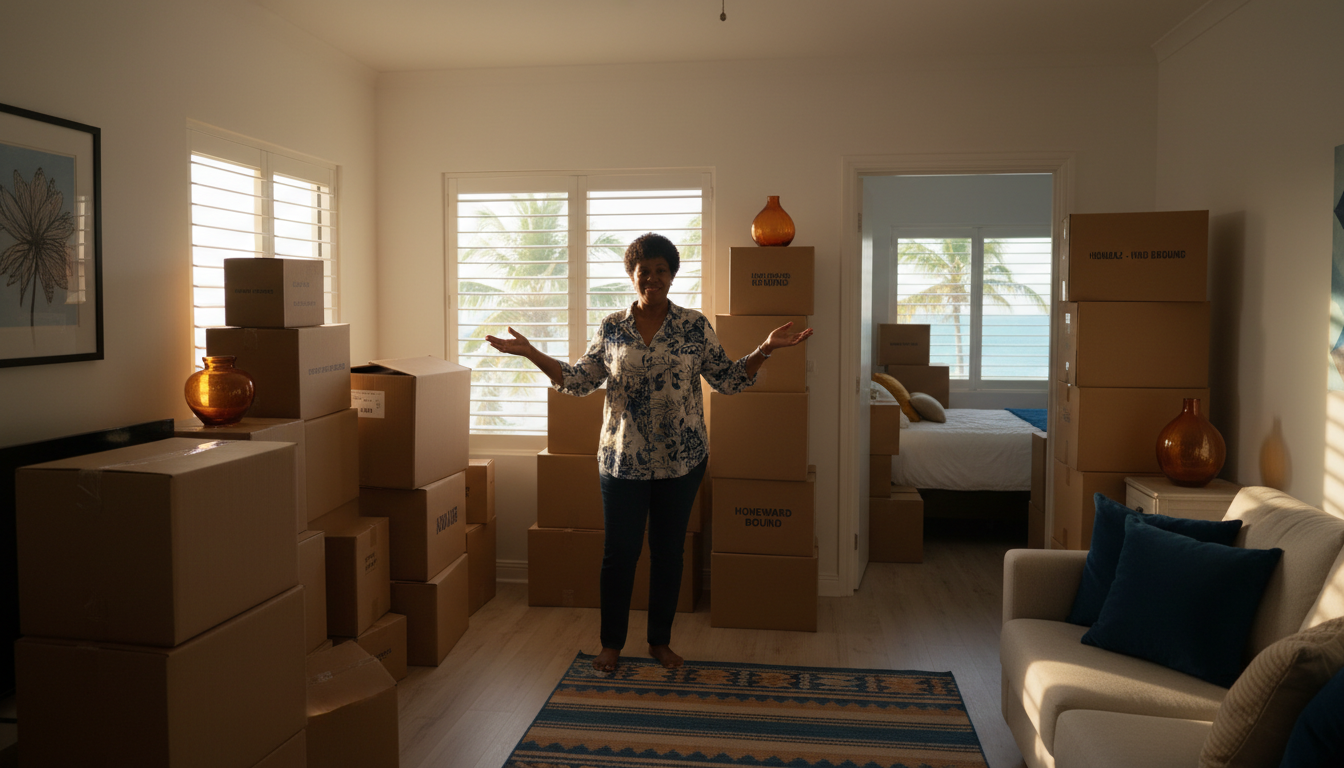
Here is a scenario that plays out for returning residents constantly: you arrive in Jamaica and move into temporary housing while you search for your permanent home. Maybe you are staying with family. Maybe you are renting a furnished apartment short-term.
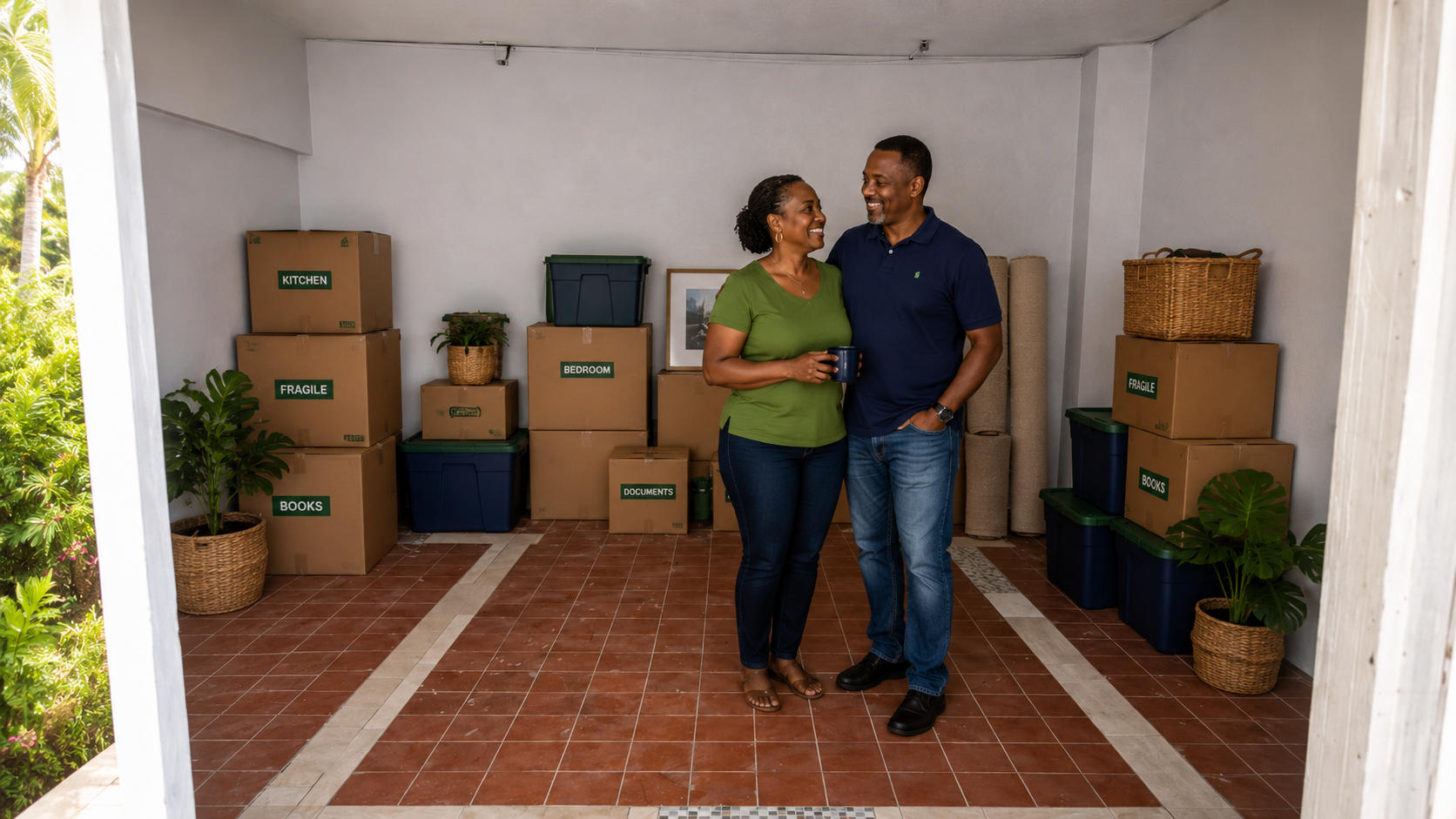
Then your container arrives from port. Fourteen boxes, six pieces of furniture, three appliances, and a rolled-up area rug.
None of it fits.
Your temporary space was never designed to hold your international shipment. And now you are faced with a decision: keep everything crammed into an already-small space and make everyone miserable, or find a solution fast.
This is not an edge case. This is the experience of the majority of returning residents during the first three to six months back home. The families who navigate this transition most smoothly are the ones who planned for this gap in advance.
The Storage Unit as Your Transition Buffer
The smartest thing you can do before you leave abroad is arrange your local storage in advance. Not after you arrive. Before.
Here is how it works as a transition buffer:
Step 1: Contact a local storage facility in the area of Jamaica where you plan to settle, before you arrive. Describe your situation, your estimated volume, and your arrival timeline.
Step 2: When your container is cleared and ready for delivery, have the larger items and non-urgent boxes delivered directly to your storage unit. Only bring what your temporary housing can genuinely accommodate into your immediate living space.
Step 3: Over the following weeks and months as you find your permanent home and get settled, gradually retrieve items from storage as you have space for them.
Step 4: By the time you are in your permanent home, everything arrives in an organized, thoughtful way rather than in an overwhelming all-at-once flood.
This approach turns what is normally one of the most stressful weeks of a return move into a manageable, phased process. You stay organized. Your belongings stay protected. And your temporary living situation stays liveable.
Protecting Your Belongings in Jamaica's Climate
Jamaica's climate, while beautiful, is not gentle on stored belongings. High humidity, heat, and the occasional tropical storm mean your items need proper protection.
Climate considerations for stored items in Jamaica:
Wood furniture can warp and crack with humidity fluctuations. Wrap properly and store in a facility with good ventilation or climate control where available.
Electronics and appliances are sensitive to humidity. Use silica gel packets inside boxes containing electronics. Ensure items are fully dry before packing.
Clothing and linens can develop mildew in humid conditions. Store in sealed bags or containers with moisture absorbers.
Documents, photos, and books should be in sealed, airtight containers or purpose-built document boxes.
Artwork and valuables should be wrapped in acid-free materials and stored away from exterior walls where temperature fluctuations are greatest.
When choosing a storage facility in Jamaica, ask specifically about ventilation, pest control measures, and how the facility handles heavy rainfall and flooding risk. A secure, well-maintained facility will have clear answers to all of these questions.
The 4-Phase Return Plan
Use this framework to structure your entire returning resident move:
Phase 1 — Decide (6 to 12 months before departure): Sort all belongings into Ship, Store Locally, and Sell or Donate. Book your freight early.
Phase 2 — Bridge (arrival month): Move into temporary housing with only what fits. Direct the remainder of your container to a local storage unit. Do not try to force everything into one space.
Phase 3 — Settle (months 2 to 6): Gradually retrieve items from storage as your permanent home comes together. Take your time. Let the transition breathe.
Phase 4 — Root (month 6 and beyond): Reassess what remains in storage. What comes home permanently. What you donate. What you realize you no longer need. You are settled now. Welcome home.
You Have Made It This Far : Let Us Help You With the Rest
Moving back to Jamaica is a courageous, beautiful decision. After years of planning and saving and dreaming, you deserve a transition that feels manageable, not chaotic.
Secure Plus+ Storage in Montego Bay understands the returning resident journey. We have helped families, individuals, and entrepreneurs navigate exactly this transition. Our secure, clean units are available in a range of sizes to match your needs, and our team will work with your timeline so your belongings are taken care of while you find your footing back home.
Contact us before you land. Let us be ready for you when you arrive.