Hurricane Preparedness Checklist Jamaica 2026 | Secure Plus
Hurricane Preparedness Checklist for Jamaica 2026: How to Protect Your Furniture, Documents and Valuables
Short answer: Start now, while the 2026 season is quiet. Scan your documents, film everything you own, and get your valuables off the floor and away from windows. If your roof or windows are weak, move what you cannot replace to a second location before a storm is named.
Tek sleep mark death: a quiet season is not a safe season
The 2026 hurricane season has been quiet so far. That is exactly when people put off getting ready.
Remember how Melissa came. It made landfall near New Hope, Westmoreland on October 28, 2025, as a Category 5 with 185 mph winds. St James was among the worst-hit parishes, and early damage estimates reached about US$8.8 billion (Jamaica Observer).
Forecasters are clear that a quiet season says nothing about whether one big storm reaches Jamaica. The season runs until November 30. That leaves two months.
Step 1: Protect your papers (do this weekend)
Losing documents slows down everything after a storm: insurance, rebuilding, bank loans, travel.
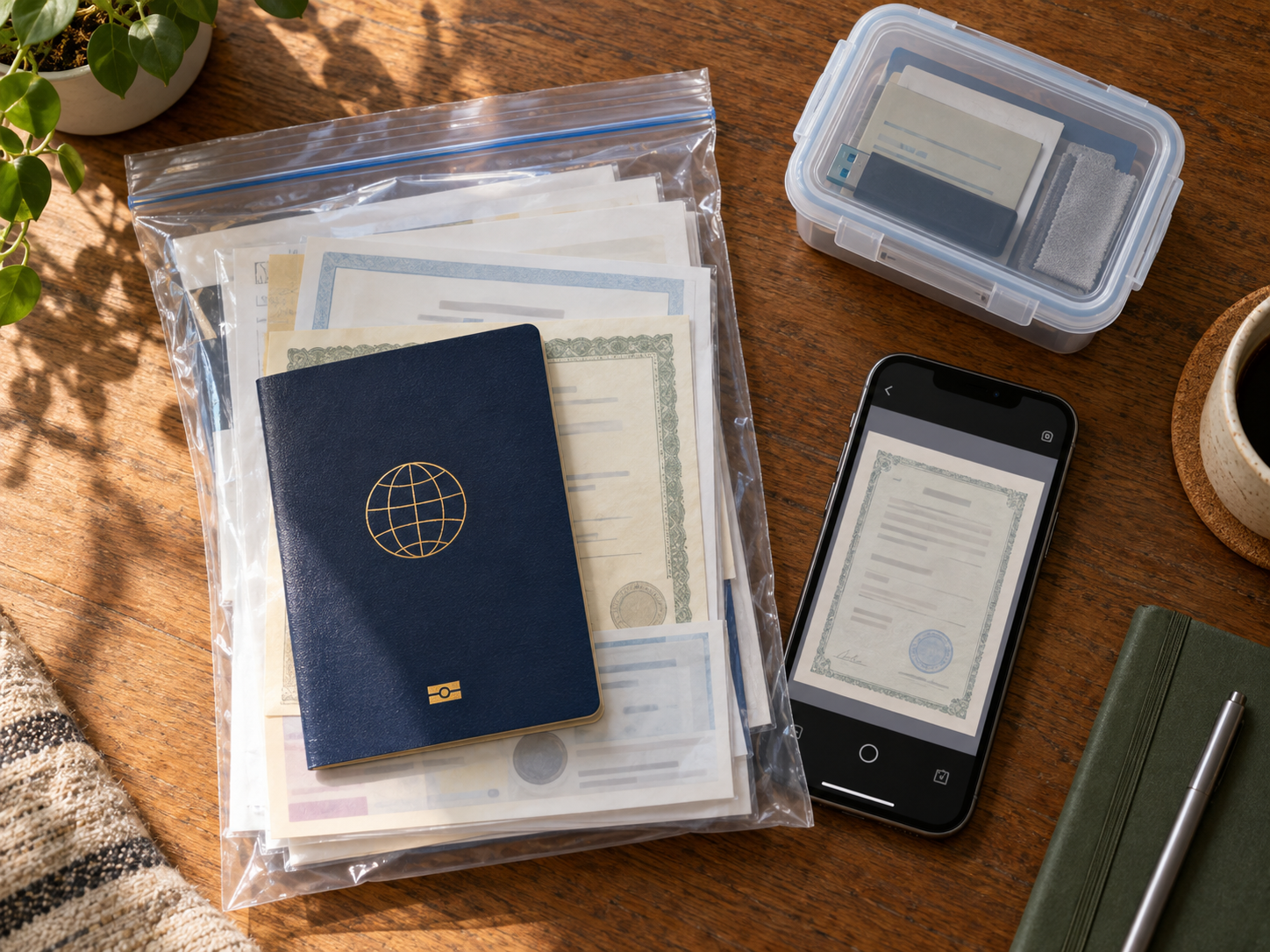
Photograph or scan your land title, birth certificates, passports, TRN, insurance policy, car title and fitness, and school records.
Save the copies in two places: email them to yourself and put them in a cloud folder.
Put the originals in zip-lock bags, inside a plastic box with a tight lid.
Keep that box somewhere you can grab it in two minutes.
Step 2: Film your home (your insurance claim depends on it)
Insurers pay for what you can prove. After Melissa, brokers warned that many Jamaican homes are underinsured and that owners should keep an up-to-date list of their contents (Jamaica Observer).
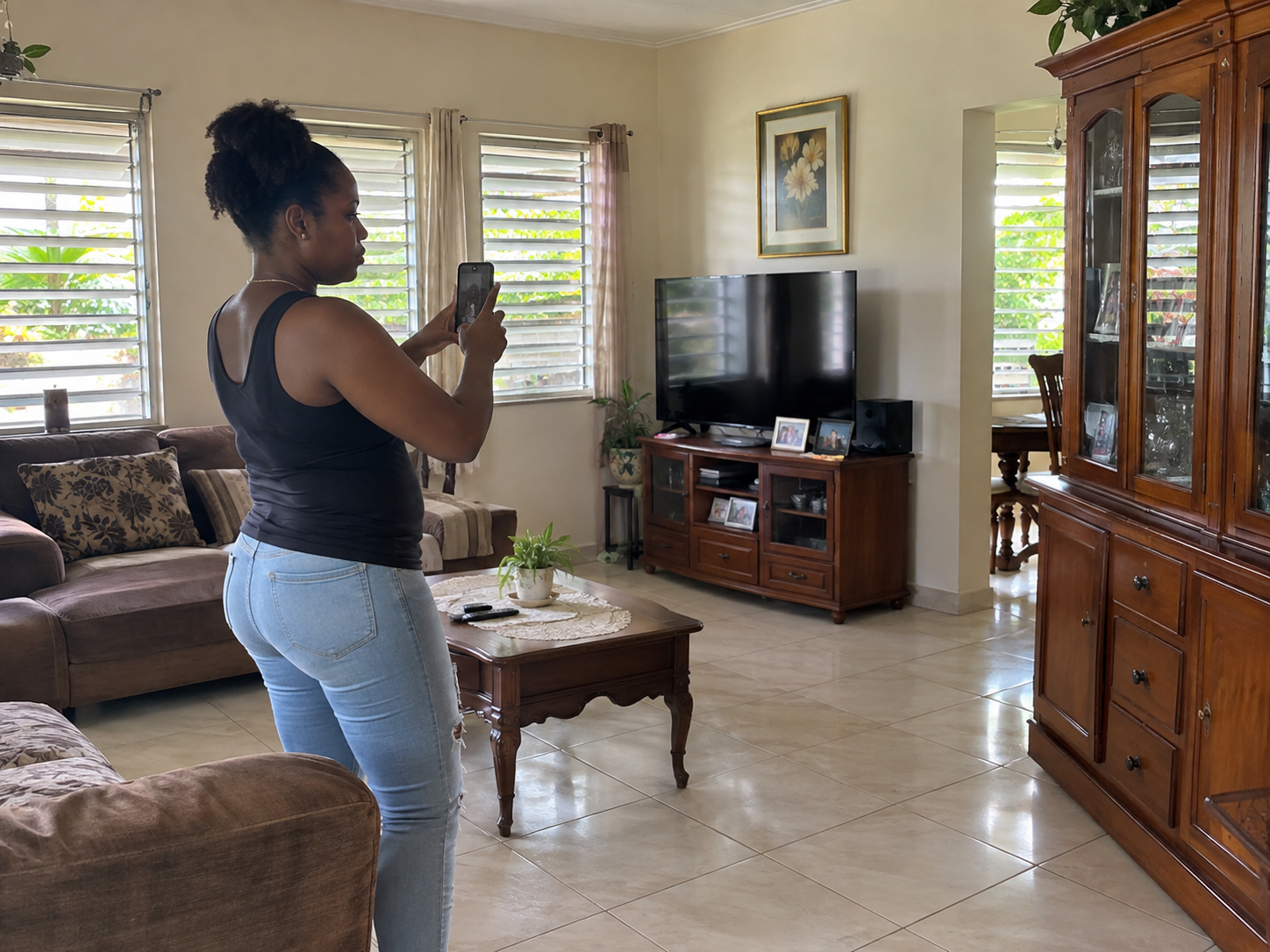
Walk through every room with your phone and record a slow video. Open drawers and cupboards.
Photograph the serial numbers on your TV, fridge, washing machine, laptop and generator.
Save receipts in the same cloud folder as your documents.
Call your broker and ask two questions: what does my policy pay for contents, and what is my deductible?
Step 3: Get furniture and appliances ready
Water and broken glass usually come in through windows and doors first. Plan around that.
Lift furniture and electronics off the floor, using blocks, pallets or an upstairs room.
Move beds, sofas and cabinets away from windows and doors.
Wrap mattresses, sofas and electronics in heavy plastic just before the storm.
Take the plastic off within a day after the storm passes. Trapped damp turns into mould fast.
Unplug appliances before the storm, so they are not damaged by a surge when power comes back.
Step 4: Decide what needs a second location
Most homes cannot protect everything in one place. If your roof is old, if you live near a gully, or if Melissa repairs are still not finished, split your things up.
Move the things you cannot replace: family photos, heirlooms, work tools, business stock, and furniture you are keeping for a new house.
Be honest about what a storage unit is. No building is hurricane-proof. What a separate unit gives you is a second place, so one damaged roof does not take everything you own.
If you use a unit, pack it for storm season:
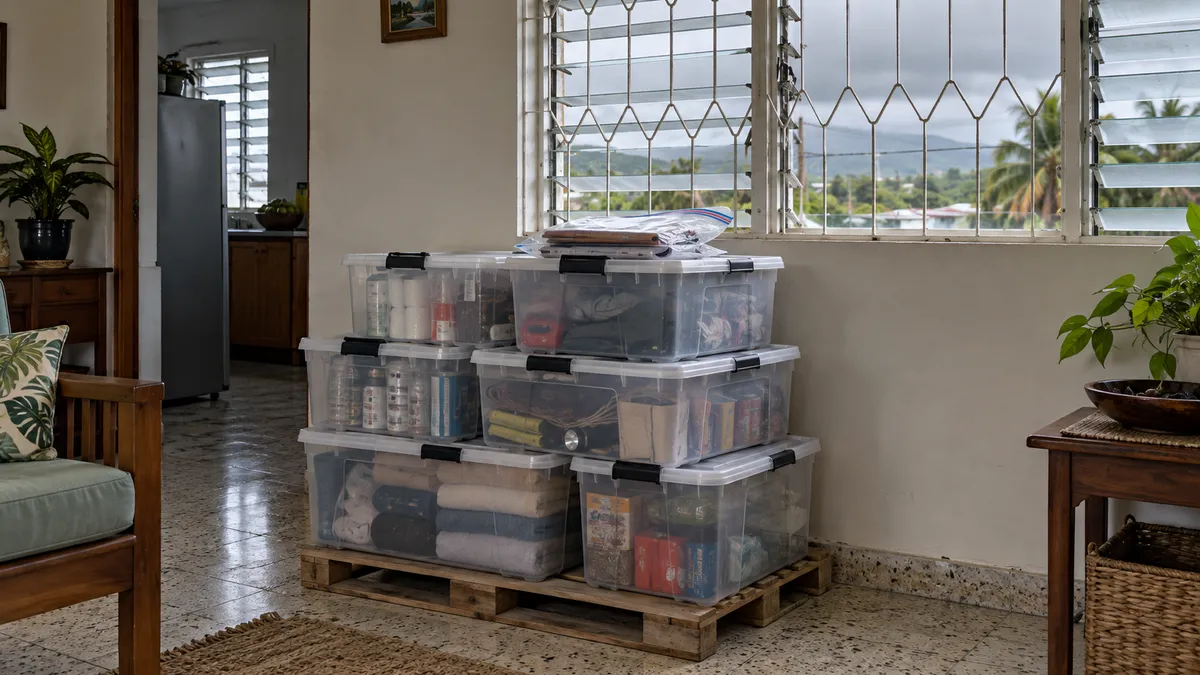
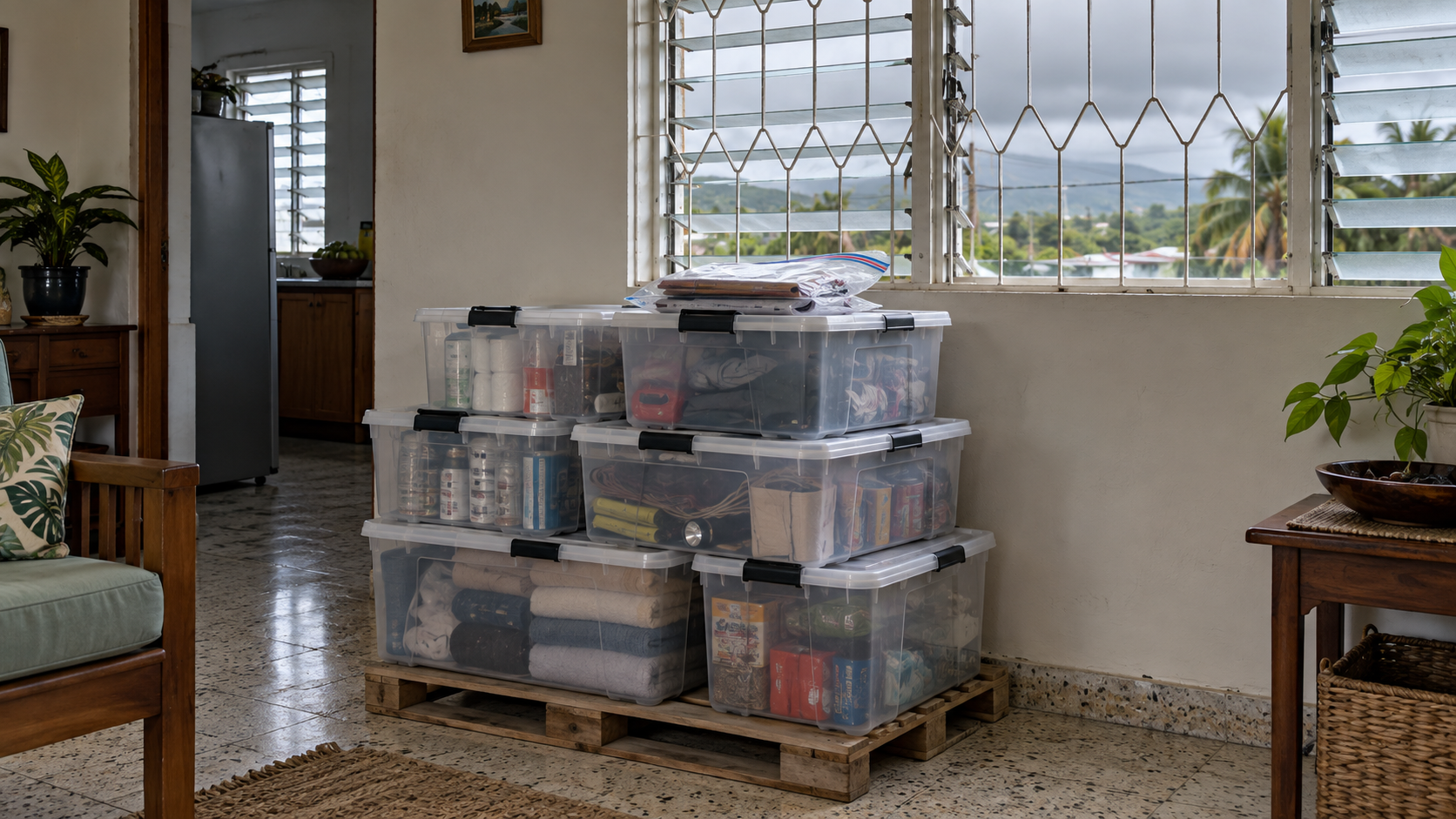
Use plastic bins with lids, not cardboard boxes.
Raise everything off the floor on pallets.
Photograph what goes in, and add it to your home inventory.
Do not store food, fuel, gas cylinders or generator petrol. They are dangerous, and they are not allowed.
Secure Plus Storage has gated, ground-level units on Rose Hall Main Road with 24/7 video surveillance. You bring your own lock and rent month to month, with no long contract.
Still fixing your house after Melissa? Read why renovations take twice as long and how to keep your things safe while the work is done.
Step 5: After the storm
Do not go into a damaged building until it is safe. Stay out of floodwater; it can carry sewage and live wires.
Photograph all damage before you clean up or throw anything out.
Dry wet furniture, clothes and papers within 24 to 48 hours. After that, mould sets in.
Report your insurance claim as soon as you can.
Frequently asked questions
When is hurricane season in Jamaica? June 1 to November 30. August to October are usually the busiest months, and Melissa showed that late-October storms can be the worst.
Which documents should I protect before a hurricane? Land title, birth certificates, passports, TRN, insurance policies, car documents and school records. Keep originals in a sealed plastic box and copies in the cloud.
Is it safe to keep my things in a storage unit during a hurricane? No building is fully safe in a major hurricane. A unit spreads your risk, so a problem at home does not destroy everything. Pack items in sealed bins and raise them off the floor.
Can I store a generator or gas cylinder in a storage unit? Not the fuel or the gas. Flammable materials are not allowed at Secure Plus Storage, for everyone's safety.
How do I stop furniture getting mouldy after a storm? Dry it within two days, keep air moving, and never leave it wrapped in plastic. Our mould guide explains more.
Get ready before the next one
Need a second place for the things you cannot replace? Book a free site tour or call +1 (876) 568-1000.
